If you want to know how to develop leadership skills, start by dropping the myth that leadership appears only after a promotion. Strong leaders are usually recognized before they receive formal authority because they make decisions calmly, communicate clearly, and create momentum for other people. Leadership development is not a personality trait. It is a set of repeatable habits you can train.
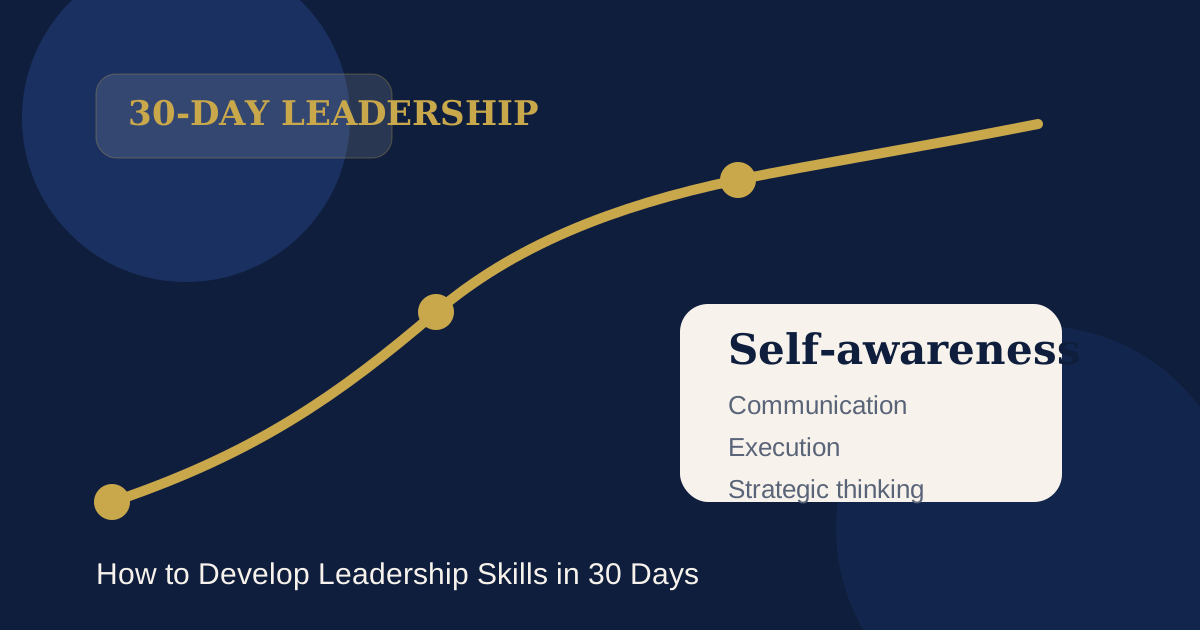
The fastest way to become a leader is to practice leadership in small, visible moments every day. Over the next 30 days, focus on four essential areas: self-awareness, communication, execution, and strategic thinking. This guide gives you a concrete week-by-week plan so you can build real leadership skills instead of collecting vague inspiration.
Key takeaways
- Leadership grows through daily behavior, not job titles.
- You need self-awareness before influence becomes sustainable.
- Clear communication and reliable follow-through build trust quickly.
- A leader solves problems for the whole team, not only for themself.
What leadership skills actually look like
Before building a plan, define the behaviors you are trying to improve. Leadership is visible through your impact on people and outcomes.
Influence starts before authority
Many professionals ask how to become a leader when the more useful question is how to become more useful to the people around them. Leadership skills show up when others trust your judgment, ask for your input, and feel more focused after speaking with you. You do not need a manager title to do that.
In practice, leadership development means improving emotional control, decision quality, communication, accountability, and the ability to move a group toward a result. When you become dependable in those areas, people naturally start following your lead.
Measure behavior, not intention
Saying you want to lead is not the same as behaving like a leader. Track signals that can be observed: Did you clarify priorities? Did you give timely feedback? Did you handle tension without becoming defensive? Did you help someone else perform better this week?
This kind of measurement matters because leadership skills improve faster when feedback is concrete. You are not trying to feel like a leader. You are trying to become someone whose actions reduce confusion and increase progress.
Week 1: Build self-awareness and credibility
The first seven days are about understanding how you currently show up under pressure. Awareness is the foundation for every other leadership skill.
Audit your current leadership patterns
At the end of each workday, write down three moments: one where you communicated well, one where you hesitated, and one where your emotions influenced your behavior. This short reflection helps you identify patterns in your tone, body language, and decisions.
Ask two trusted colleagues one simple question: 'What makes me easier to work with, and what makes me harder to work with?' Their answer will usually reveal the exact habits holding back your leadership development.
- Keep a five-minute leadership journal every day.
- Ask for external feedback from at least two people.
- Choose one habit to improve this week, not five.
Raise your reliability immediately
One of the fastest ways to improve leadership skills is to become more predictable. When you commit to something, deliver it on time. When plans change, communicate early. When you make a mistake, own it without excuses. Credibility compounds faster than charisma.
People follow leaders who create stability. If your team knows you bring clarity instead of drama, your influence will rise even before your official responsibilities change.
Week 2: Communicate with clarity and calm
Leadership is often judged through communication. The goal this week is to make your message shorter, clearer, and more useful.
Use a simple communication structure
In meetings or one-to-ones, organize your message in three steps: the situation, the decision, and the next action. This structure prevents rambling and makes it easier for others to trust your thinking. Clear communication is one of the most practical leadership skills because it reduces friction everywhere.
Practice saying difficult things directly but respectfully. For example: 'The project is behind schedule. Here are the two blockers. I recommend option B, and I can own the next step today.' That is what leadership sounds like in real life.
Make your conversations developmental
If you want to become a leader, stop using conversations only to exchange updates. Use them to increase ownership in other people. Ask questions that help them think: What outcome are we aiming for? What is getting in the way? What decision do you recommend?
The more you help others think clearly instead of solving everything yourself, the more your leadership development accelerates. Strong leaders create capable people, not dependence.
Week 3: Strengthen execution, delegation, and trust
By week three, your focus shifts from personal behavior to team performance. Leadership is not only about insight. It is about execution through other people.
Delegate outcomes, not just tasks
A common mistake for new leaders is over-explaining every step because they are afraid of mistakes. Better delegation starts with the outcome, the standard, the deadline, and the support available. Then let the person own the path.
This improves leadership skills in two ways. First, it shows trust. Second, it forces you to think more strategically about what success actually looks like instead of micromanaging activity.
- Define the expected result in one sentence.
- Explain what 'good' looks like before work begins.
- Agree on one check-in point instead of constant monitoring.
Give useful feedback fast
Leadership development slows down when feedback is delayed. Give feedback while the context is still fresh. Be specific about what happened, why it mattered, and what change you want next time. Directness is respectful when it helps someone improve.
At the same time, learn to recognize wins with equal precision. When people know exactly what strong performance looks like, they repeat it more often. That creates a culture of trust and momentum.
Week 4: Think and act like a leader every day
The final week is about stepping above your task list and learning to lead at a higher altitude.
Own one strategic problem
Choose one recurring issue in your team: slow handoffs, unclear priorities, weak meeting discipline, or inconsistent customer follow-up. Instead of complaining about it, propose a simple solution. Leaders earn influence by improving systems, not only by completing assignments.
This habit is essential if you want to know how to become a leader over the long term. Strategic thinking begins when you ask, 'What pattern keeps creating this problem, and how can we fix the root cause?'
Create a repeatable 30-day rhythm
At the end of the month, review what changed. Which conversations improved? Where did you earn more trust? What leadership skill still feels weak? Then build your next 30-day cycle around one priority area so progress continues.
Leadership skills are built through repetition. A daily journal, one weekly feedback request, one deliberate delegation, and one system improvement per month will move you much further than occasional bursts of motivation.
Frequently asked questions
Can leadership skills really improve in 30 days?
Yes, especially the visible habits people notice first: reliability, communication, feedback, and ownership. Thirty days will not make anyone perfect, but it is enough time to change how others experience your leadership.
What is the most important leadership skill to start with?
Self-awareness usually creates the fastest improvement because it affects communication, conflict, and trust. Once you understand your patterns, the rest of your leadership development becomes more targeted.
How do I become a leader without formal authority?
Solve problems, communicate clearly, help others perform better, and follow through consistently. Those actions build influence, and influence is the core of leadership long before a title changes.
Ready to go deeper?
Turn insight into a practical system.
The Leadership Mastery Program gives you practical frameworks, exercises, and bilingual guidance to turn daily habits into lasting leadership.
Explore the Leadership Mastery Program — $49.90