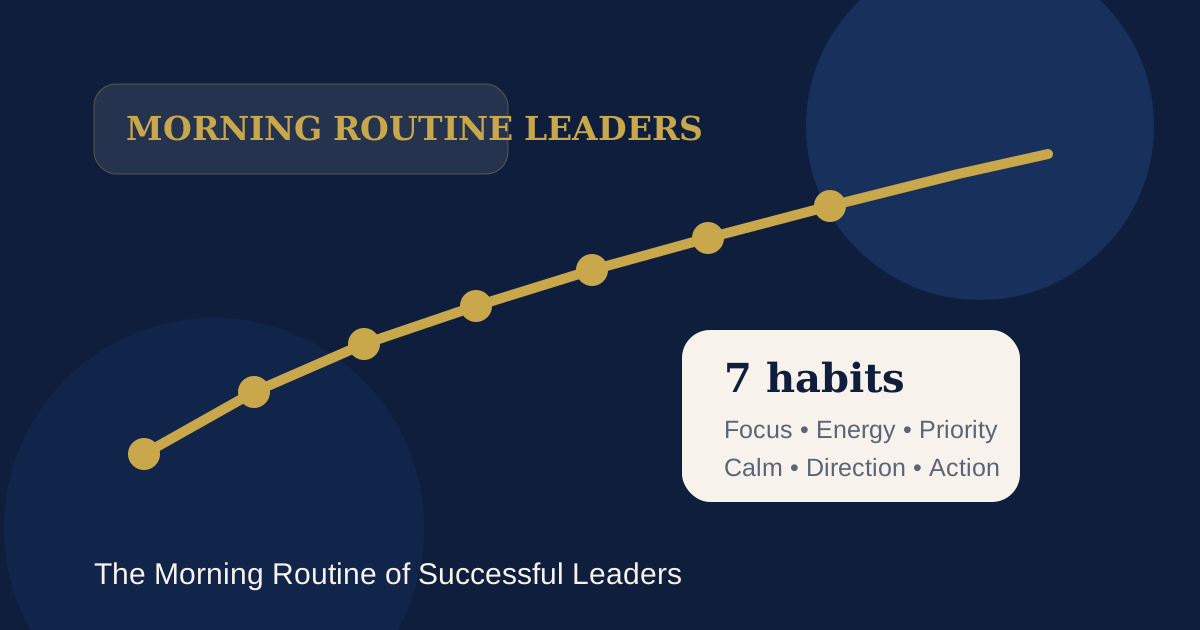
The morning routine of successful leaders is not about copying a celebrity schedule or waking up at an extreme hour. It is about creating a first hour that protects attention, sharpens judgment, and sets a calmer tone for the rest of the day. Leaders who start reactively often spend the rest of the day recovering from that loss of control.
A strong leadership morning routine should help you think before the noise starts. That means fewer impulsive decisions, better energy, and more intention in how you communicate. The seven habits below are practical enough for real life and flexible enough to adapt to different schedules. What matters is not perfection. It is consistency.
Key takeaways
- The best morning routine leaders use protects focus before the day becomes reactive.
- Small habits done consistently beat an unrealistic two-hour ritual.
- Energy, clarity, and intention matter more than early wake-up theatrics.
- A leadership morning routine should improve both personal performance and team impact.
Habits 1 and 2: Wake with intention and avoid instant reactivity
The first few minutes of the day often decide whether you lead the day or the day leads you.
Habit 1: Start without rushing your nervous system
The morning routine leaders rely on usually begins with a small pause instead of immediate stimulation. Before opening messages, give yourself a few minutes to breathe, stretch, drink water, and orient your mind. This short gap lowers mental noise and makes your first decisions more deliberate.
You do not need a complicated ritual. What matters is that your day starts from intention instead of reaction. Even five minutes of calm helps you enter the day with more authority over your attention.
Habit 2: Delay email and notifications
One of the fastest ways to lose a leadership morning routine is to let other people's urgency control the first ten minutes of the day. The inbox is a reactive environment. It trains your brain to respond before you have decided what actually matters.
Successful habits often begin by protecting that window. Give yourself at least twenty to thirty minutes before diving into notifications. That boundary preserves clarity and reduces the chance that minor issues hijack your priorities.
Habits 3 and 4: Move your body and think on paper
Physical activation and mental clarity work together. Leaders do better when both are addressed early.
Habit 3: Create energy with light movement
A leadership morning routine does not require an intense workout every day, but it should include some physical activation. A walk, mobility work, light training, or a few minutes of stretching can improve alertness, mood, and readiness to focus.
This matters because leadership is embodied. Your posture, energy, and emotional steadiness all affect how people experience you. Movement helps you bring a better version of yourself into the first conversation of the day.
Habit 4: Use a short journal or planning page
Morning routine leaders often think on paper before they think in public. Writing for a few minutes helps you clear mental clutter and separate signal from noise. You might note what you are feeling, what matters most today, and what you need to avoid.
This is one of the most effective successful habits because it turns vague pressure into visible priorities. Once thoughts are externalized, they stop competing for attention in the same chaotic way.
Habits 5 and 6: Decide your priority and lead one conversation early
A powerful morning routine does not stop at self-care. It should improve how you execute and how you influence others.
Habit 5: Define the one outcome that matters most
Before the day accelerates, identify the one result that would make the day meaningful even if everything else became noisy. This keeps your leadership morning routine tied to execution, not just mood management.
Without this step, leaders drift into activity instead of progress. A simple sentence is enough: 'Today, the most important outcome is to finalize the proposal, resolve the hiring decision, or clarify the team's priorities.'
Habit 6: Start one important conversation sooner
Many leaders postpone the conversation that matters most because it carries discomfort. But the morning is often the best time to handle it, when your energy and clarity are highest. This could be feedback, alignment, a key decision, or a direct message to unblock a project.
Successful habits are not only private rituals. They shape visible leadership. When you handle an important conversation early, you create momentum that the rest of the team can feel.
Habit 7: Review your standard and make the routine repeatable
The best routine is the one you can sustain on busy weekdays, travel days, and imperfect mornings.
Habit 7: Keep a short reset standard
At the end of your morning routine, take thirty seconds to review the standard you want to hold today. That standard may be calm, clarity, courage, discipline, or patience. This final cue turns your routine into a leadership identity practice, not just a checklist.
A leadership morning routine becomes far more powerful when it influences how you behave under pressure later in the day. You are not just preparing tasks. You are shaping how you show up.
- Keep the routine short enough to survive busy mornings.
- Anchor it around energy, focus, and one meaningful priority.
- Review it weekly and remove anything that adds friction without value.
Build your own version, not a performative one
The morning routine of successful leaders varies widely, but the principle is consistent: protect attention, strengthen energy, and set direction before reactivity takes over. A twenty-minute routine you actually repeat is better than a ninety-minute routine you abandon.
Start with three habits this week and expand only if the system holds. That is how successful habits become part of your leadership instead of another plan that looks good on paper and disappears in practice.
Frequently asked questions
What is the best morning routine for leaders?
The best routine is one that protects focus, creates energy, and sets a clear priority before the day becomes reactive. It does not need to be long, but it does need to be repeatable.
Do successful leaders always wake up very early?
Not necessarily. The key advantage comes from intentionality, not from a specific wake-up time. A consistent first hour matters more than trying to copy an extreme schedule.
How long should a leadership morning routine take?
For most people, twenty to forty-five minutes is enough. The routine should feel realistic on normal workdays so it can become a stable habit instead of an occasional ideal.
Build habits that hold under pressure
Turn insight into a practical system.
Personal Development Kickstart gives you a practical structure for stronger routines, better focus, and more consistent personal growth.
Start the Personal Development Kickstart — $29.90